部署到 iOS 和 Android
由于我们在首次创建项目时将 Capacitor 添加到项目中,因此在我们的设备上安装照片库应用之前只需要执行几个步骤!
🌐 Since we added Capacitor to our project when it was first created, there’s only a handful of steps remaining until the Photo Gallery app is on our device!
Capacitor 设置
🌐 Capacitor Setup
Capacitor 是 Ionic 的官方应用运行时,它使将 Web 应用部署到 iOS、Android 等本地平台变得容易。如果你以前使用过 Cordova,可以考虑在这里了解更多关于差异的信息 here。
🌐 Capacitor is Ionic’s official app runtime that makes it easy to deploy web apps to native platforms like iOS, Android, and more. If you’ve used Cordova in the past, consider reading more about the differences here.
如果你仍然在终端中运行 ionic serve,请取消它。完成对 Ionic 项目的全新构建,修复它报告的任何错误:
🌐 If you’re still running ionic serve in the terminal, cancel it. Complete a fresh build of the Ionic project, fixing any errors that it reports:
ionic build
接下来,创建 iOS 和 Android 项目:
🌐 Next, create both the iOS and Android projects:
ionic cap add ios
ionic cap add android
在项目根目录下创建了 Android 和 iOS 文件夹。这些都是完全独立的原生项目,应该被视为你 Ionic 应用的一部分(即,将它们提交到版本控制,使用其原生工具编辑它们,等等)。
🌐 Both android and ios folders at the root of the project are created. These are entirely standalone native projects that should be considered part of your Ionic app (i.e., check them into source control, edit them using their native tooling, etc.).
每次你执行一个构建(例如 ionic build)并更新你的 web 目录(默认:build)时,你都需要将这些更改复制到你的原生项目中:
🌐 Every time you perform a build (e.g. ionic build) that updates your web directory (default: build), you'll need to copy those changes into your native projects:
ionic cap copy
注意:在对代码的本地部分进行更新(例如添加新插件)后,使用 sync 命令:
🌐 Note: After making updates to the native portion of the code (such as adding a new plugin), use the sync command:
ionic cap sync
iOS 部署
🌐 iOS Deployment
要构建 iOS 应用,你需要一台 Mac 计算机。
Capacitor iOS 应用通过 Xcode(苹果的 iOS/Mac IDE)进行配置和管理,依赖由 CocoaPods 管理。在在 iOS 设备上运行此应用之前,需要完成几个步骤。
🌐 Capacitor iOS apps are configured and managed through Xcode (Apple’s iOS/Mac IDE), with dependencies managed by CocoaPods. Before running this app on an iOS device, there's a couple of steps to complete.
首先,运行电容器 open 命令,这将打开 Xcode 中的原生 iOS 项目:
🌐 First, run the Capacitor open command, which opens the native iOS project in Xcode:
ionic cap open ios
为了某些本地插件能够工作,必须配置用户权限。在我们的照片图库应用中,这包括相机插件:iOS 会在第一次调用 Camera.getPhoto() 后自动显示一个模态对话框,提示用户允许该应用使用相机。驱动此功能的权限标记为“隐私 - 相机使用”。要设置此权限,必须修改 Info.plist 文件(更多详情)。要访问它,请点击“信息”,然后展开“自定义 iOS 目标属性”。
🌐 In order for some native plugins to work, user permissions must be configured. In our photo gallery app, this includes the Camera plugin: iOS displays a modal dialog automatically after the first time that Camera.getPhoto() is called, prompting the user to allow the app to use the Camera. The permission that drives this is labeled "Privacy - Camera Usage." To set it, the Info.plist file must be modified (more details here). To access it, click "Info," then expand "Custom iOS Target Properties."
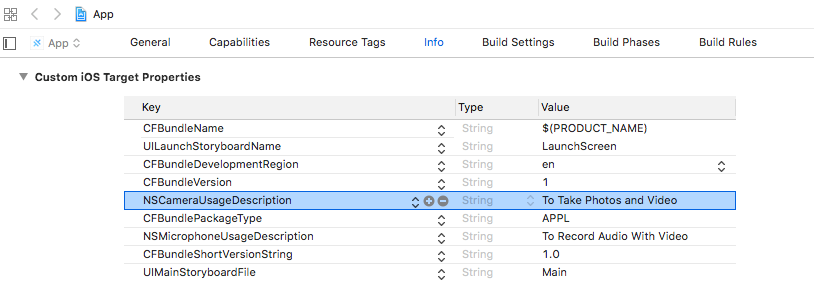
Info.plist 中的每个设置都有一个底层参数名称和一个高级名称。默认情况下,属性列表编辑器显示高级名称,但切换为显示原始底层名称通常很有用。要执行此操作,请在属性列表编辑器的任意位置右键单击,然后切换“原始键/值”。
🌐 Each setting in Info.plist has a low-level parameter name and a high-level name. By default, the property list editor shows the high-level names, but it's often useful to switch to showing the raw, low-level names. To do this, right-click anywhere in the property list editor and toggle "Raw Keys/Values."
添加 NSCameraUsageDescription 键,并将值设置为描述应用为何需要使用相机的内容,例如“用于拍照”。当权限提示打开时,值字段会显示给应用用户。
🌐 Add the NSCameraUsageDescription Key and set the Value to something that describes why the app needs to use the camera, such as "To Take Photos." The Value field is displayed to the app user when the permission prompt opens.
按照相同的流程添加相机插件所需的另外两个密钥:NSPhotoLibraryAddUsageDescription 和 NSPhotoLibraryUsageDescription。
🌐 Follow the same process to add the other two Keys required of the Camera plugin: NSPhotoLibraryAddUsageDescription and NSPhotoLibraryUsageDescription.
接下来,在左侧的项目导航器中点击 App,然后在 Signing & Capabilities 部分中,选择你的开发团队。
🌐 Next, click on App in the Project Navigator on the left-hand side, then within the Signing & Capabilities section, select your Development Team.
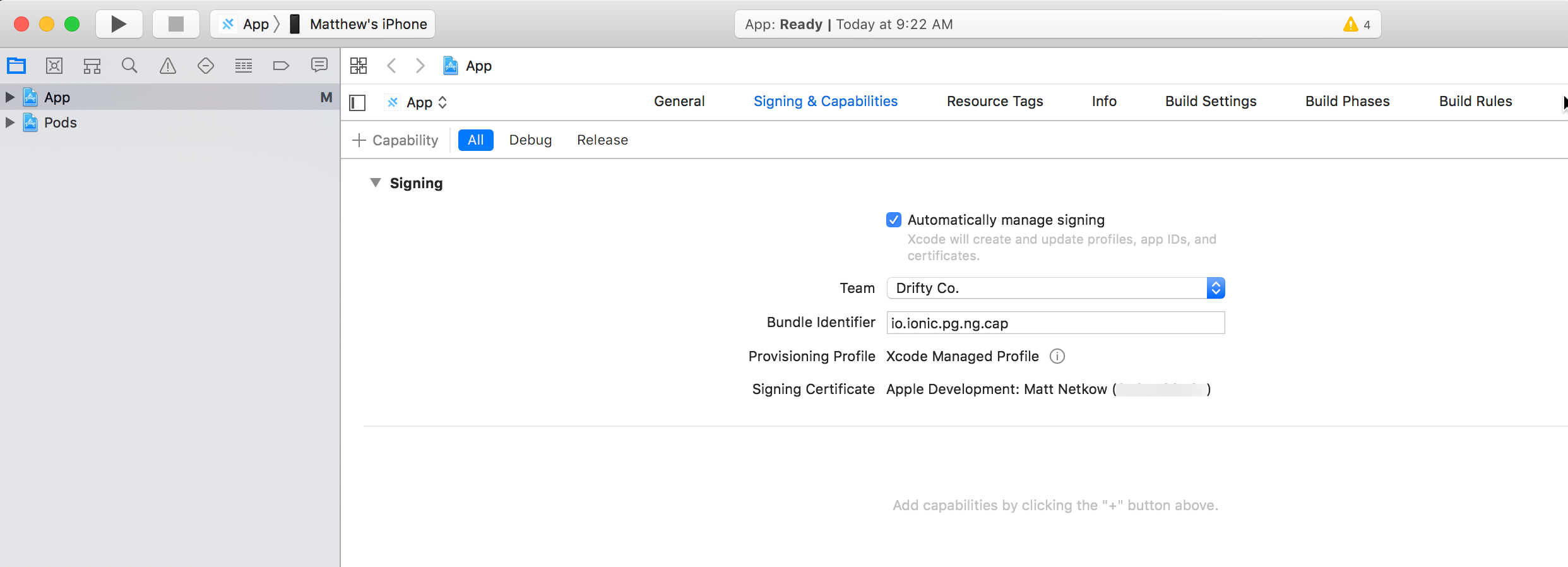
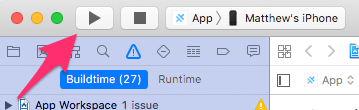
在权限就绪并选择开发团队后,我们已经准备好在真实设备上试用该应用!将 iOS 设备连接到你的 Mac 电脑,选择它(对我来说是 App -> Matthew’s iPhone),然后点击“构建”按钮,在你的设备上构建、安装并启动应用:
🌐 With permissions in place and Development Team selected, we are ready to try out the app on a real device! Connect an iOS device to your Mac computer, select it (App -> Matthew’s iPhone for me) then click the "Build" button to build, install, and launch the app on your device:
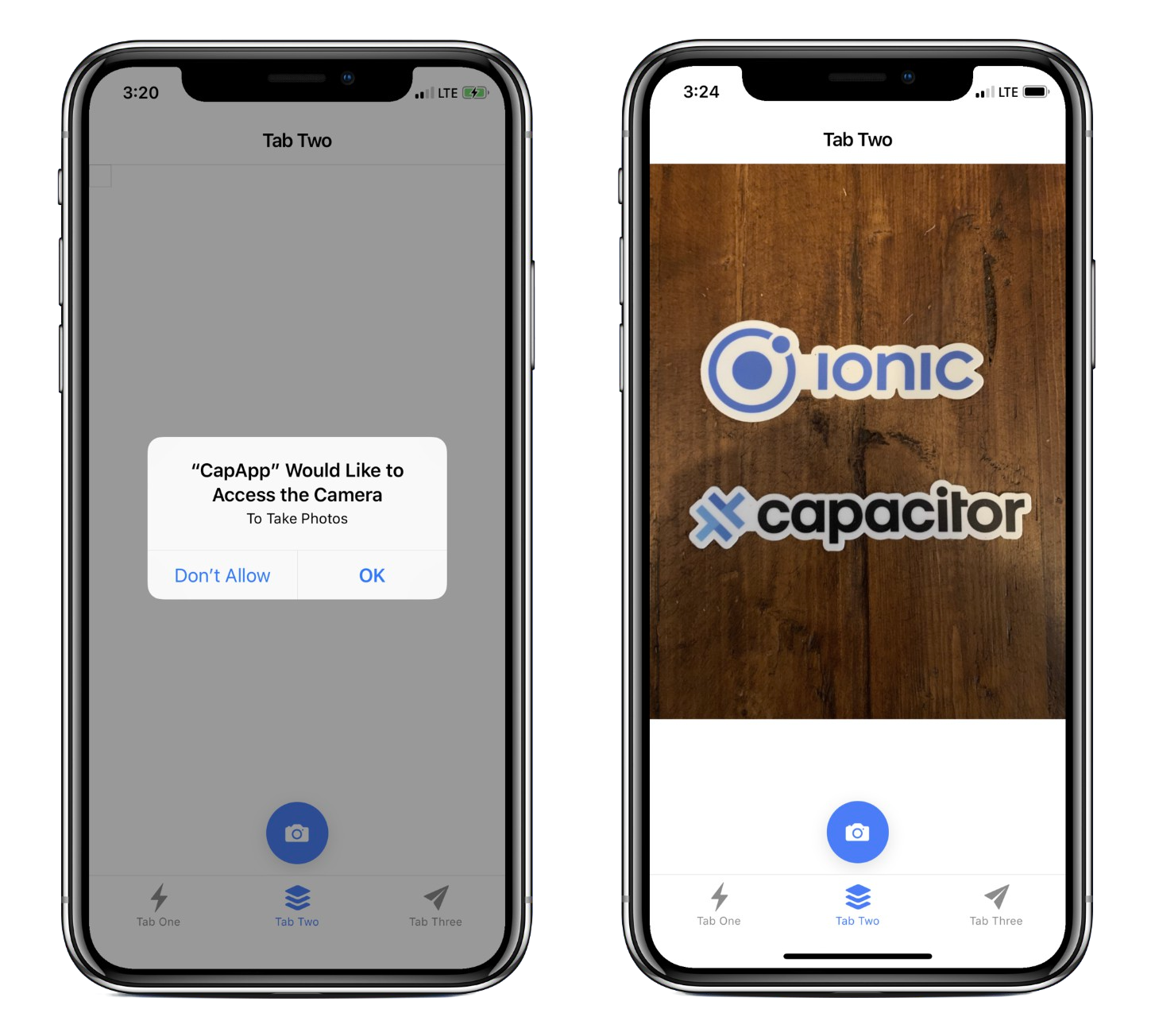
在照片库标签上点击相机按钮后,将显示权限提示。点击确定,然后使用相机拍照。之后,照片会显示在应用中!
🌐 Upon tapping the Camera button on the Photo Gallery tab, the permission prompt will display. Tap OK, then take a picture with the Camera. Afterward, the photo shows in the app!
安卓部署
🌐 Android Deployment
Capacitor Android 应用通过 Android Studio 配置和管理。在将此应用运行在 Android 设备上之前,需要完成几个步骤。
🌐 Capacitor Android apps are configured and managed through Android Studio. Before running this app on an Android device, there's a couple of steps to complete.
首先,运行 Capacitor open 命令,这将会在 Android Studio 中打开原生的 Android 项目:
🌐 First, run the Capacitor open command, which opens the native Android project in Android Studio:
ionic cap open android
与 iOS 类似,我们必须启用正确的权限才能使用相机。在 AndroidManifest.xml 文件中配置这些权限。Android Studio 可能会自动打开此文件,但如果没有,请在 android/app/src/main/ 下找到它。
🌐 Similar to iOS, we must enable the correct permissions to use the Camera. Configure these in the AndroidManifest.xml file. Android Studio will likely open this file automatically, but in case it doesn't, locate it under android/app/src/main/.
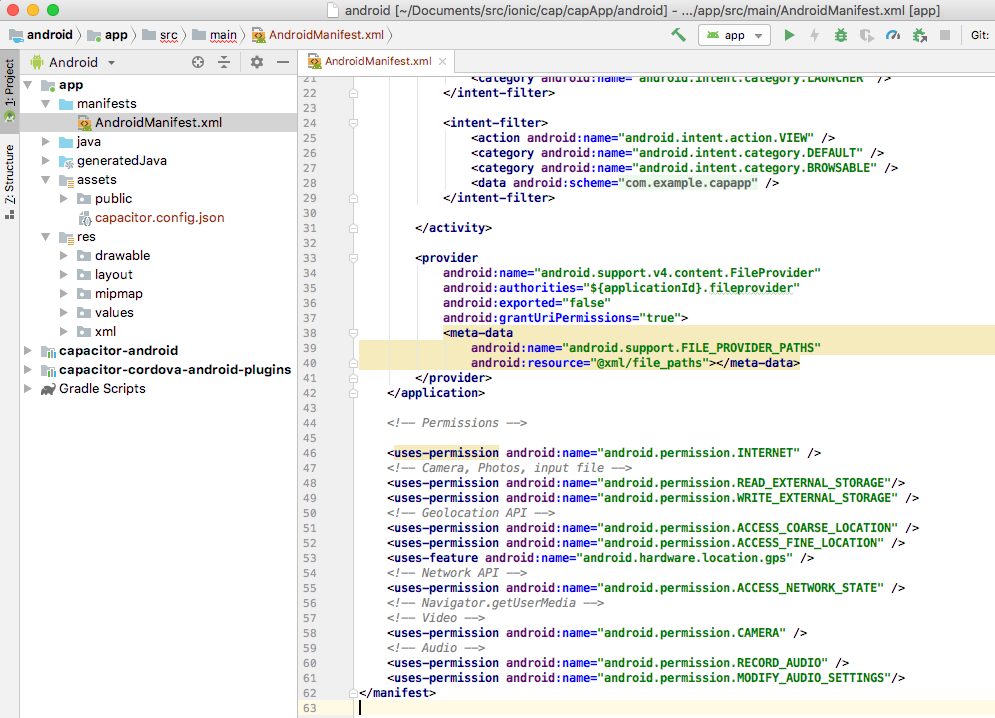
滚动到 Permissions 部分,确保包括以下条目:
🌐 Scroll to the Permissions section and ensure these entries are included:
<uses-permission android:name="android.permission.READ_EXTERNAL_STORAGE"/>
<uses-permission android:name="android.permission.WRITE_EXTERNAL_STORAGE" />
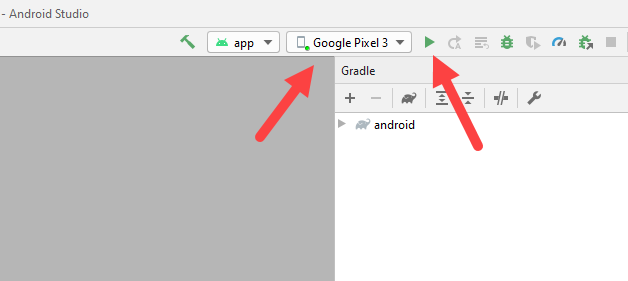
保存文件。有了权限之后,我们就可以准备在真实设备上试用应用了!将一台安卓设备连接到你的电脑。在 Android Studio 中,点击“运行”按钮,选择已连接的安卓设备,然后点击确定以构建、安装并在你的设备上启动应用。
🌐 Save the file. With permissions in place, we are ready to try out the app on a real device! Connect an Android device to your computer. Within Android Studio, click the "Run" button, select the attached Android device, then click OK to build, install, and launch the app on your device.
再次,在点击照片库标签上的相机按钮时,应该显示权限提示。点击确定,然后使用相机拍照。之后,照片应该会出现在应用中。
🌐 Once again, upon tapping the Camera button on the Photo Gallery tab, the permission prompt should be displayed. Tap OK, then take a picture with the Camera. Afterward, the photo should appear in the app.
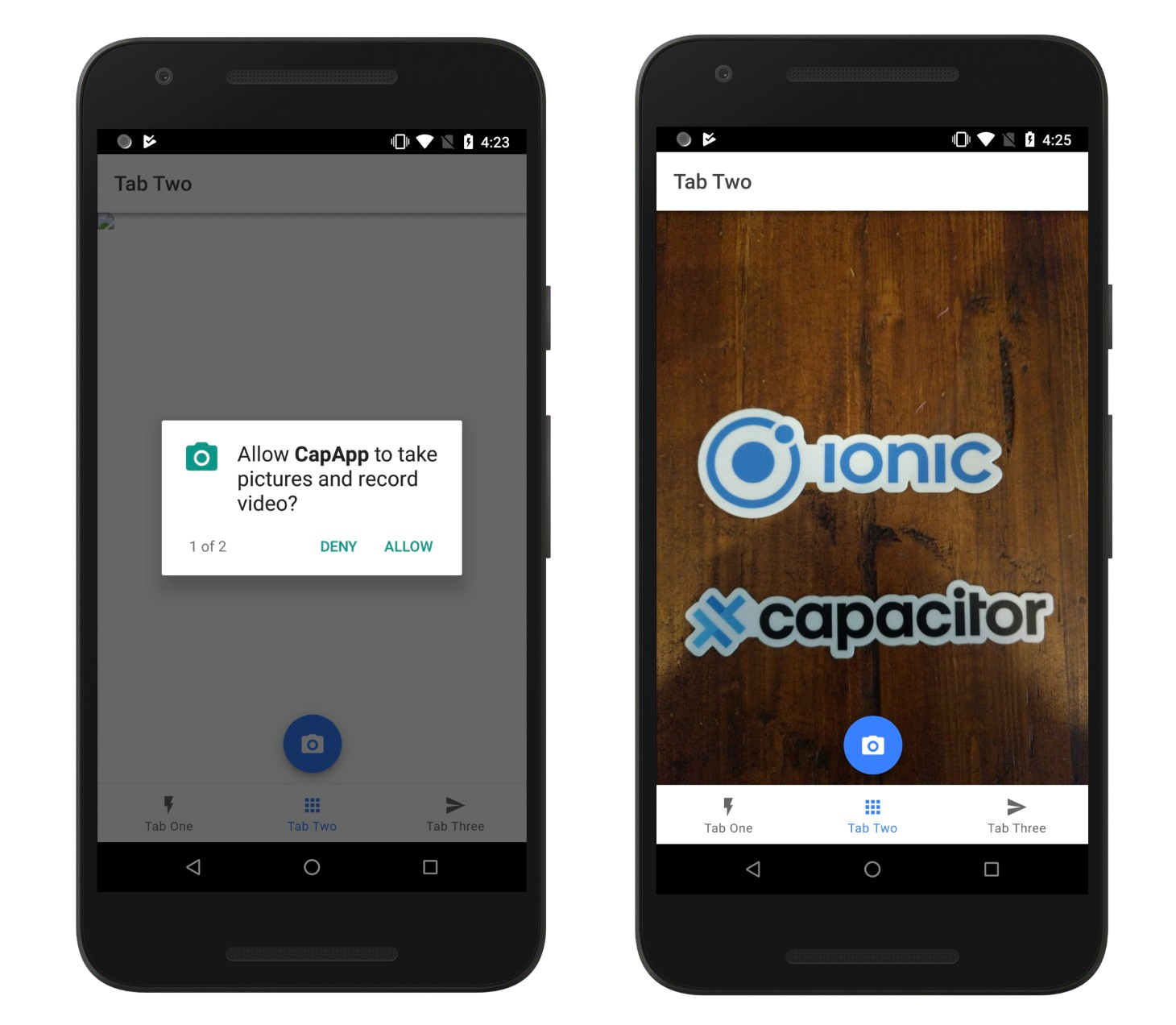
我们的照片图库应用刚刚在 Android 和 iOS 设备上部署完成。🎉
🌐 Our Photo Gallery app has just been deployed to Android and iOS devices. 🎉
在本教程的最后部分,我们将使用 Ionic CLI 的实时重载功能来快速实现照片删除功能——从而完成我们的照片图库功能。
🌐 In the final portion of this tutorial, we’ll use the Ionic CLI’s Live Reload functionality to quickly implement photo deletion - thus completing our Photo Gallery feature.